Systems
HomeKit in a large villa — where the limits are
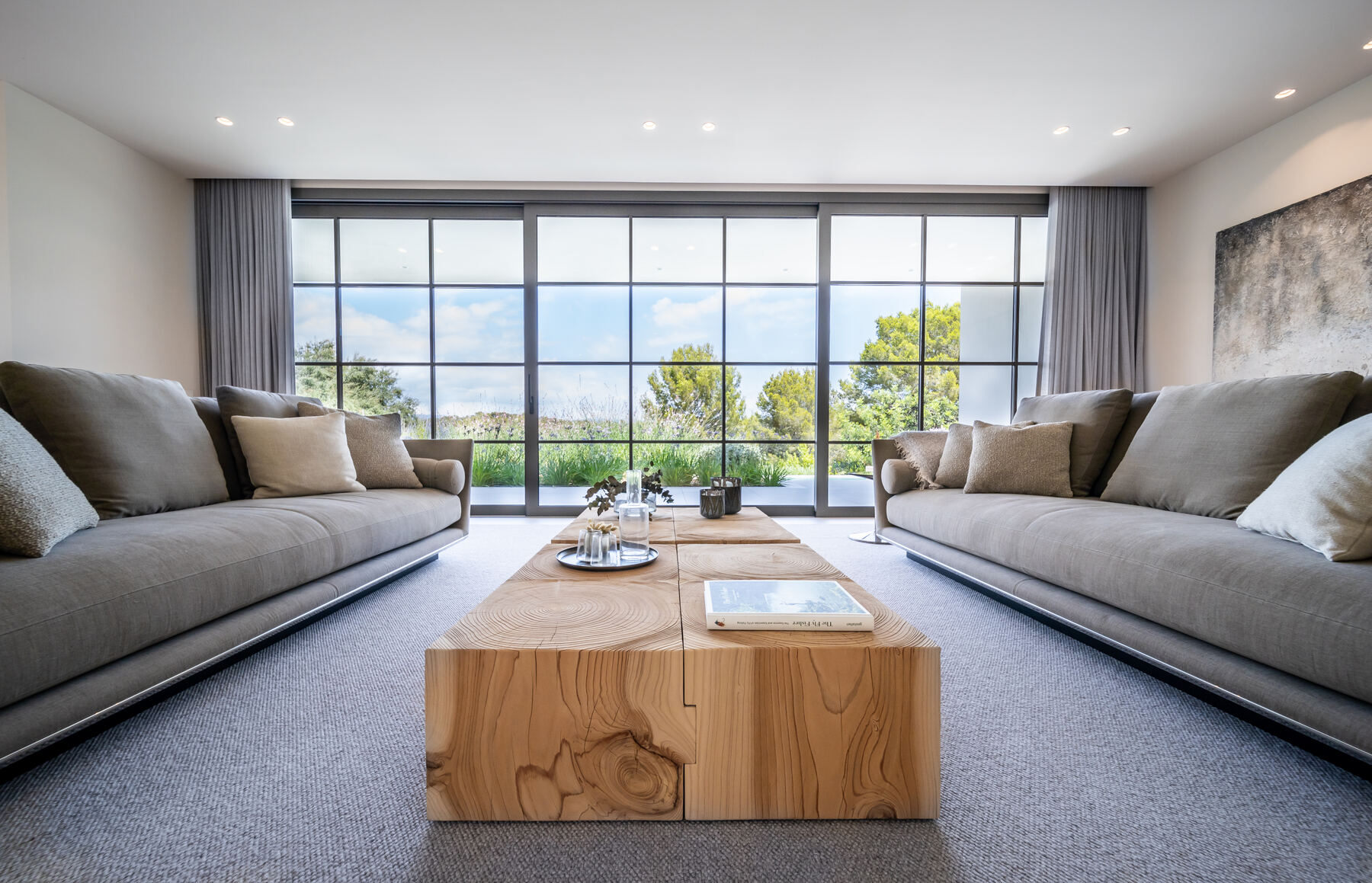
Apple Home starts to strain somewhere around 150 accessories, and its automation engine runs out of road long before that. In a large villa it belongs on top of a proper control system, not in place of one — which is a limitation worth understanding rather than discovering.
I'm as committed to Apple Home as anyone selling smart homes on this island, so it's worth being straight about where it falls down. Every complaint below is real and every one of them has a solution; the mistake is only ever expecting Apple Home to be something it was never designed to be.
Where it actually breaks
Accessory count. Apple has never published a hard ceiling, but in practice homes get sluggish somewhere past 100–150 accessories, and unreliable beyond that. A villa with a hundred lighting circuits, twenty shading motors, a dozen climate zones and a camera on every elevation passes that comfortably. The fix is grouping: the house is exposed to Apple Home as rooms and scenes rather than as every individual actuator.
Automation logic. Apple's automation editor handles "when this, do that" and very little else. No nested conditions, no loops, no variables, no meaningful time arithmetic. "Close the west blinds when the sun is above 40° azimuth, unless someone's on the terrace, and not before 11am in winter" is a normal request in a Mallorcan villa and is simply not expressible.
Hub dependence. Automations run on a home hub — an Apple TV or HomePod. If that hub is on congested Wi-Fi, or the house has several and they elect a poor one, automations get slow or silently stop. In a large property the hub should be wired via Ethernet, and this is the single most common misconfiguration I find.
No proper scheduling. Seasonal schedules, holiday modes, occupancy-based routines for a house empty nine months a year — all of it lives outside Apple Home's model.
The reframe that fixes everything. Apple Home is not the automation system. It's the remote control. Put the intelligence in KNX and Home Assistant, expose the results as a handful of clean accessories and scenes, and every limitation above stops mattering.
What that looks like in practice
In a well-built villa, Home Assistant sits on a small server in the plant room and does the thinking: sun position, occupancy, seasonal logic, conditional scenes, the lot. It then exposes perhaps forty things to Apple Home — rooms, a dozen scenes, the cameras, the gates.
Your family sees a calm, fast Home app with tiles that work. Apple never sees the hundred KNX circuits underneath. The accessory count problem disappears because the complexity is hidden one layer down, which is where it belongs.
Three things I'd fix in most villas today
- Wire the hub. Ethernet to the Apple TV or HomePod acting as home hub. Immediate, dramatic reliability improvement, and it costs a cable.
- Prune the accessory list. Nobody needs individual control of ninety circuits from their phone. Six good scenes per room beat ninety sliders nobody touches.
- Move logic off Apple. Anything with a condition in it should live in Home Assistant, where it can be tested, versioned and fixed without waiting for an iOS update.
What Apple Home is genuinely excellent at
Guest sharing that revokes instantly. An interface nobody has to be taught. Voice that actually works. Local processing with no third-party cloud in the path. Software that will still exist in ten years — which, in this industry, is a rarer property than it should be.
Those four things are worth designing a house around, and they're why I build the way I do. Just don't ask the remote control to be the engine. More on Apple Home migration.
Start with a survey
Half a day at the house, €450 fixed. A written report on what you have, what's wrong with it and what putting it right would cost — yours to keep whether or not you use me.
Book a survey →Questions
Straight answers.
How many devices can Apple Home handle?
Apple publishes no hard limit, but homes typically become sluggish past 100 to 150 accessories and unreliable beyond that. A large villa exceeds this easily, which is why the house should be exposed to Apple Home as rooms and scenes rather than as every individual circuit.
Why are my HomeKit automations slow or unreliable?
Almost always the home hub. Automations execute on an Apple TV or HomePod, and if that device is on congested Wi-Fi or competing with other hubs, they lag or stop. Connecting the hub by Ethernet resolves most cases immediately.
Can HomeKit do conditional automations?
Only simple ones. There are no nested conditions, variables or loops, so anything involving sun position, occupancy or seasonal logic needs Home Assistant underneath, with the result surfaced to Apple Home as a single scene.
Should I use HomeKit or a professional system in a big house?
Both. Use KNX or Lutron to switch the loads, Home Assistant for the logic, and Apple Home as the interface your family touches. Treating Apple Home as the whole system is where large installations disappoint.