Money
What a smart home actually costs in Mallorca
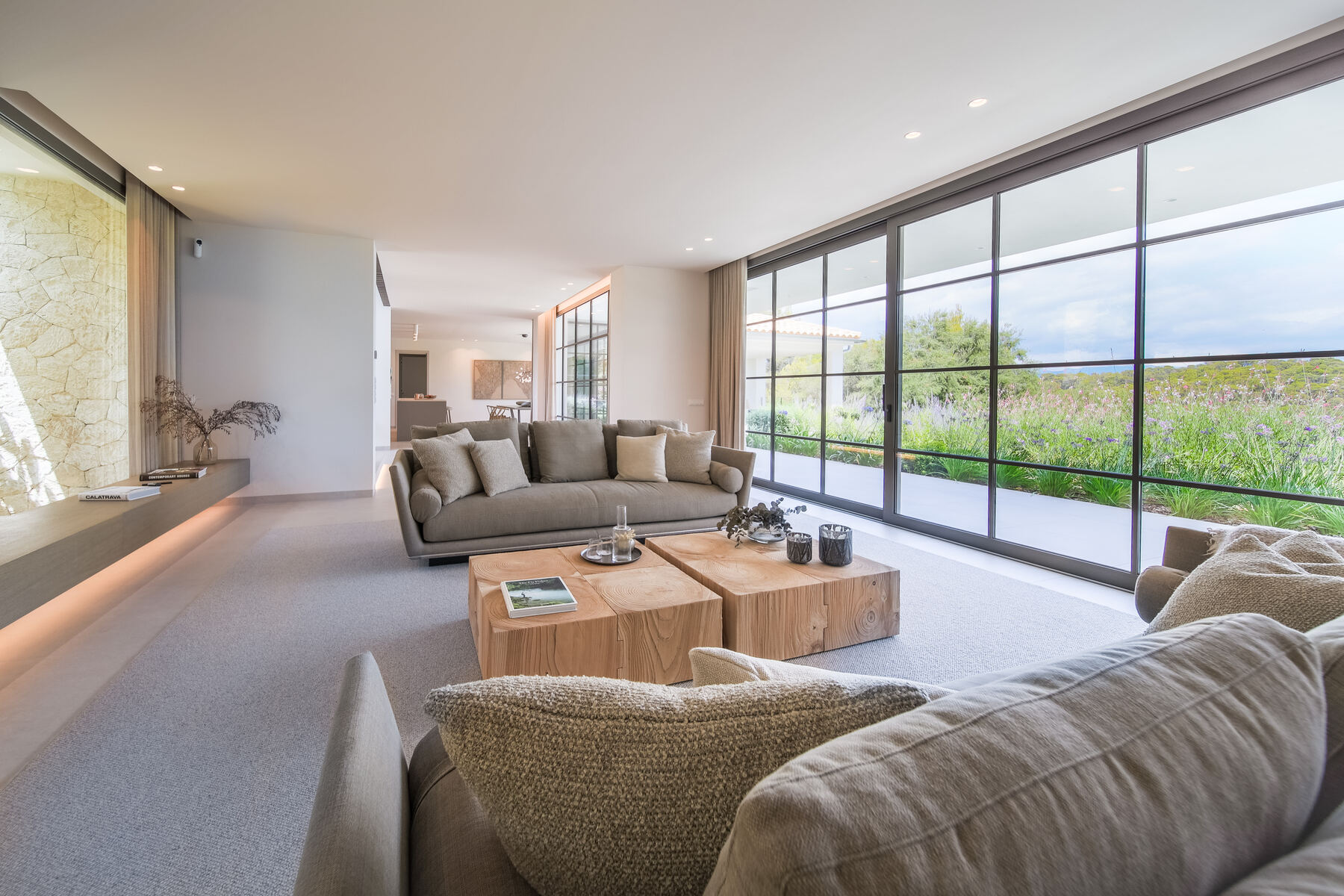
Short answer: a focused retrofit runs €4,000–€15,000, a new-build villa integration starts around €25,000 and reaches €150,000 or more with cinema and full shading, and a useful rule of thumb for a new build is 3–8% of construction cost. Below is where those numbers actually come from.
Nobody in this market publishes prices. I find that irritating as a customer, so here they are. These are real ranges from real quotes on this island, not a national average scraped from somewhere else.
The three shapes a project takes
| Type | Range | What you get |
|---|---|---|
| Survey and report | €450 | Half a day on site, network measured, everything inventoried, written report with costed options. Credited against work. |
| Retrofit / migration | €4,000 – €15,000 | Existing systems bridged into one app, network rebuilt, scenes designed, household trained. |
| New build or full renovation | €25,000 – €150,000+ | Designed before first fix, cabled properly, lighting, climate, shading, audio, security, documented. |
The four things that move the price
1. The number of lighting circuits. This is the single biggest driver, and it's decided by your architect's lighting design rather than by anything technical. Forty circuits and a hundred circuits are genuinely different projects. Every circuit needs an actuator channel, a cable, a position in the board and a line in the commissioning.
2. Whether you're opening walls. A house being renovated to shell costs a fraction of a finished house to wire, because the cable is nearly free while the walls are open and ruinously expensive afterwards. This is why timing matters more than specification.
3. Shading. Motorised blinds, awnings and pergolas are expensive per opening, and Mallorcan villas have a lot of openings. It's frequently the largest single line in a villa budget and the one people underestimate most.
4. Audio and cinema. Optional, unbounded, and the easiest place to spend €60,000 without noticing. Also the area where the gap between good and very good is least perceptible to most families.
The network is not the place to save. It's typically 15–30% of a project and it determines whether you enjoy the other 70%. I have never once been called back to a house where the complaint turned out to be that the network was over-specified.
What I'd spend €10,000 on
If someone handed me €10,000 for an existing Mallorcan villa that already has decent hardware, in this order: rebuild the network properly (roughly €5,000), bridge everything into Apple Home and swap the dead wall panels for iPads in flush mounts (€3,000), rebuild the scenes around how the family actually lives and train them on it (€1,500), and put the rest into documentation. No new automation hardware at all. That house would go from frustrating to genuinely pleasant, and every euro would be spent on the layers that were failing.
What's not in the number
Light fittings themselves, which belong to your lighting designer's budget. Mains electrical work and the boletín, which sits with the electrician. Blind and awning hardware, though I specify and integrate it. Televisions. And ongoing support, which is quoted against the property and is the thing that determines whether any of this still works in three years.
Percentage of build cost
For new builds, 3–8% of construction cost is the honest planning figure. At the lower end that's lighting control, climate, network and basic security. At the upper end it's full integration with cinema, distributed audio, extensive shading and access control. Anything under 3% and something is being left out that you'll want later; much over 8% and you're usually paying for entertainment rather than infrastructure.
Start with a survey
Half a day at the house, €450 fixed. A written report on what you have, what's wrong with it and what putting it right would cost — yours to keep whether or not you use me.
Book a survey →Questions
Straight answers.
Is a smart home worth it financially?
Not as a direct return. Energy savings from good climate and shading control are real but rarely pay back a substantial system within a decade. The genuine returns are comfort, security, and — on this island specifically — resale, since the luxury market increasingly expects it and a badly executed system is a visible negative in a viewing.
Why do quotes vary so much for the same house?
Usually because they're not for the same thing. One will assume a full rewire and another a retrofit. One includes the network and another doesn't. One is a dealer with a margin on hardware and another is charging a design fee. Ask every quote to break out hardware, labour, network and commissioning separately and the differences stop being mysterious.
Can I do it in stages?
Yes, and it's often sensible. Get the network and cabling right first, since those are the parts that are expensive to revisit, then add layers as budget allows. What doesn't work is adding cabling later — that's the one thing that has to happen while the walls are open.
What does it cost to run?
The systems themselves draw very little. The real ongoing cost is support, quoted per property, which most owners of unmanaged systems avoid and then pay for anyway in the form of an unusable house.