Security
Security for a villa that stands empty nine months a year
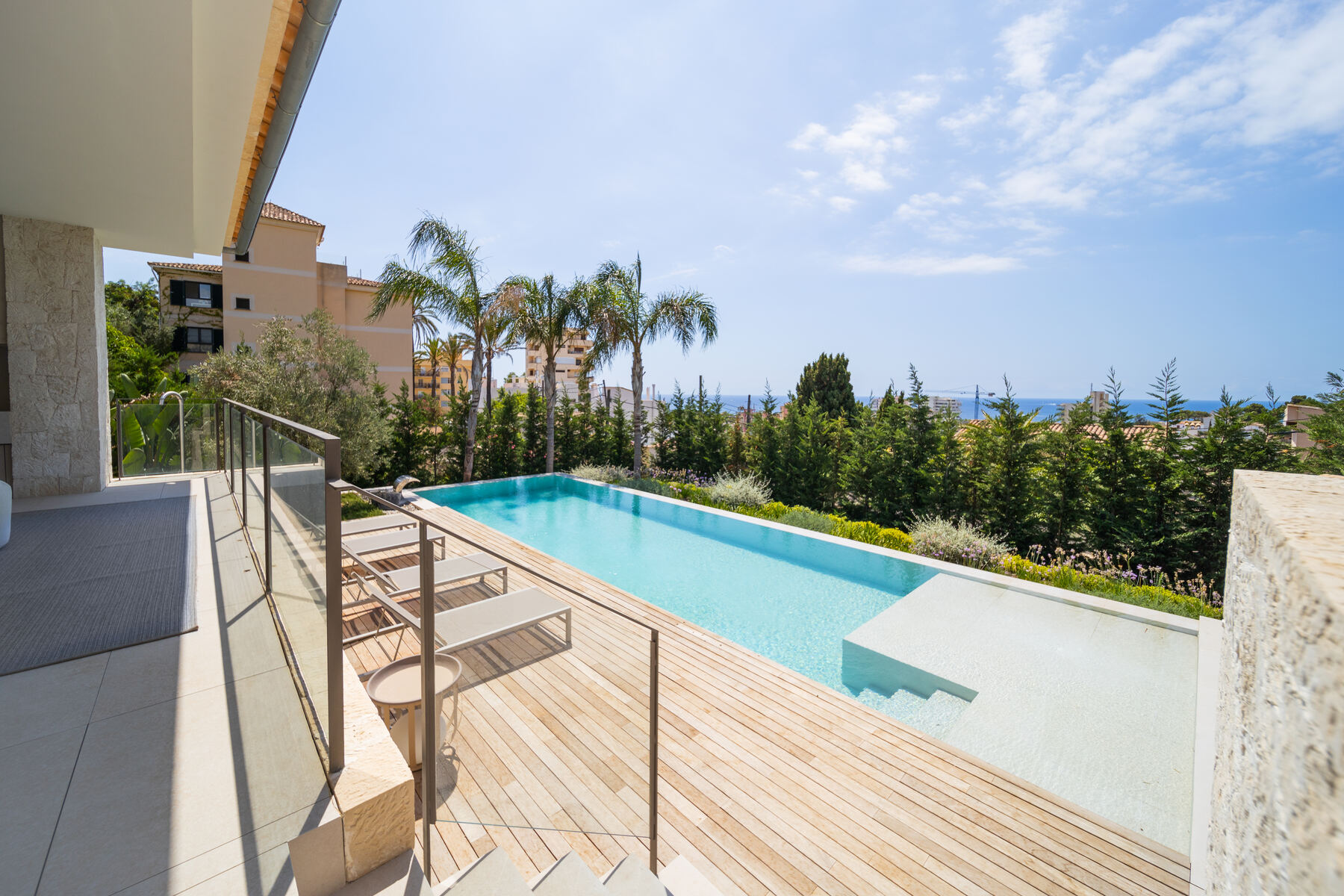
Burglary is the risk owners ask about. Water is the risk that actually empties the bank account. A villa left alone through a Mallorcan winter is far more likely to be damaged by a failed pipe, a storm or a tripped breaker than by anyone climbing the wall — and all three are cheap to detect and expensive to discover late.
What actually happens to empty houses here
Water. A supply pipe, a boiler fitting or a washing machine hose lets go in November. Nobody is in the house. The manager visits fortnightly. By the time it is found, the ground floor is ruined, and in a stone building the moisture stays in the fabric for a year afterwards. This is the single most common serious claim on villas on this island.
Power. A breaker trips during a storm. The freezer defrosts, the pool pump stops, the filtration goes anaerobic and the pool turns green — which is a €600 problem and a fortnight of chemistry rather than a disaster, but an avoidable one.
Humidity. A closed villa with no ventilation and no dehumidification grows mould through a wet winter, particularly in north-facing rooms and anywhere with limestone. Owners arrive at Easter to a smell that takes months to remove.
Storms. An awning left extended in a Tramuntana gale destroys itself and often the wall it was fixed to. A wind sensor prevents this entirely and costs less than the excess on the claim.
And, yes, intrusion. Real, but less frequent than the above, and overwhelmingly opportunistic — an obviously empty house with shutters closed for months and post visible through the gate.
What to monitor, in order of what it saves
| Sensor | Typical cost | What it prevents |
|---|---|---|
| Leak detectors at every wet point | €30 – €90 each | The claim that ruins a winter |
| Automatic water shut-off valve | €400 – €1,200 | Everything downstream of the leak |
| Power and mains monitoring | €100 – €400 | Freezer, pool, alarm going dark |
| Humidity sensors per zone | €25 – €70 each | Mould, and the furniture in it |
| Wind sensor | €400 – €1,200 | Awnings, pergolas, the wall behind them |
| PoE cameras, per unit | €180 – €600 | Intrusion, and knowing who came |
A leak detector costs less than a restaurant dinner. An automatic shut-off valve that closes the mains when one of them gets wet is the most cost-effective thing you can fit to a house that stands empty, and it is routinely left out of specifications in favour of a fourth camera.
The test that matters. Not "did it record the problem" but "did somebody act on it". An alert nobody receives, or receives in a language they do not read, at three in the morning, is not monitoring. Decide who gets which alert before you buy any of it.
Making an empty house look occupied
Presence simulation has a poor reputation because most implementations are obvious — a lamp snapping on at exactly 19:00 every evening announces an empty house more clearly than darkness. Done properly it varies: different rooms on different evenings, timing tied to actual sunset rather than the clock, blinds that move during the day, and lighting that behaves the way a person behaves.
Combined with shading that opens and closes and a gate that occasionally operates for the gardener, that is a far more convincing signal than any alarm box on a wall.
Where the alarm fits
A monitored alarm has a role, especially for insurance, and existing panels can very often be brought into the same system rather than replaced — many speak a documented protocol and simply need bridging. What I would avoid is treating the alarm as the whole security story. It tells you somebody is inside. It does not tell you the boiler failed in January, which is the event far more likely to actually cost you money.
What a sensible package looks like
For a typical villa: leak detection at every wet point with an automatic shut-off, humidity sensors in the rooms that suffer, power monitoring, a wind sensor if there is anything to retract, four to six cameras recording locally, and shading and lighting doing the occupied-house impression. That lands around €4,000 to €9,000 installed, and the water half of it is the part that pays for itself.
Then somebody has to be responsible for the alerts, which is what managed support exists for. More on the camera layer in cameras without the cloud.
Start with a survey
Half a day at the house, €450 fixed. A written report on what you have, what's wrong with it and what putting it right would cost — yours to keep whether or not you use me.
Book a survey →Questions
Straight answers.
What is the biggest risk to an empty holiday home?
Water. A failed pipe or fitting in an unoccupied villa can run for a fortnight before anyone notices, and in stone construction the moisture stays in the building for a year afterwards. Leak detectors and an automatic shut-off valve cost a fraction of the damage they prevent.
How can I monitor a villa in Mallorca from another country?
Leak, humidity, power and wind sensors reporting to a system that sends alerts to your phone, plus cameras recording locally. The important design decision is not the hardware but who receives which alert and who is expected to act on it.
Does presence simulation actually deter anyone?
Only if it varies. Lighting that switches at the same time every evening signals an empty house. Randomised lighting tied to actual sunset, blinds that move during the day and occasional gate activity read as occupancy far more convincingly than any alarm box.
Can my existing alarm be integrated rather than replaced?
Usually. Many alarm panels speak a documented protocol and can be bridged into the same system as the rest of the house, keeping any monitoring contract intact. Only fully closed panels with no local interface need replacing.